

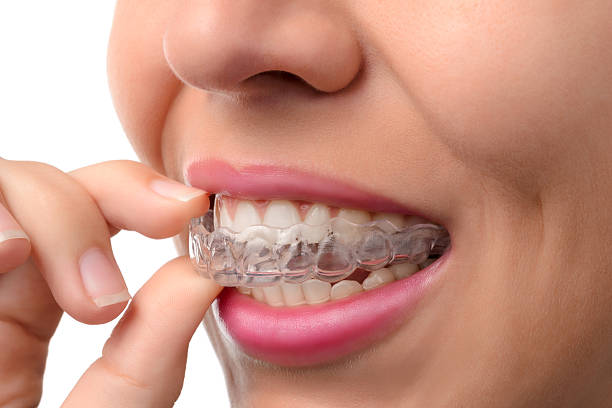
Some Invisalign patients need elastics—small rubber bands that work with clear aligners to provide additional bite support. While the trays guide tooth movement, elastics apply force in specific directions to help the upper and lower teeth fit together more effectively. Needing them doesn’t mean your treatment is failing; they may be a planned part of correcting your bite.
At Nicholas Dose, DMD Family Dentistry in Lake Oswego, OR, Dr. Dose evaluates your teeth and bite to determine whether elastics would help support your treatment. If they’re recommended, we’ll explain where to connect them and when to wear and replace them. Following those instructions consistently helps the aligners and rubber bands work together as intended.
What Are Invisalign Elastics or Rubber Bands?
Invisalign elastics are small orthodontic rubber bands used with clear aligners in selected cases. They stretch between specific connection points, often linking the upper and lower teeth through hooks or precision cutouts in the aligners, or small buttons bonded to teeth.
The stretched elastic applies an extra pull in a direction chosen by your dentist. That force works alongside the aligners to help correct how your upper and lower teeth meet. The connection points, elastic strength, and wear schedule are selected for your particular bite.
Elastics are different from the tooth-colored attachments used to help aligners grip teeth, although both may be part of the same treatment plan.
Are Invisalign Elastics the Same as Braces Rubber Bands?
They serve a similar purpose: adding directed force to support tooth movement and bite correction. The main difference is where they connect.
With braces, elastics typically connect to hooks on brackets or other fixed components. With Invisalign, they may connect to aligner hooks, precision cuts, or bonded buttons. Attachments may also help the aligners stay secure and control tooth movement, but they generally aren’t the points where rubber bands connect.
Your dentist will show you the exact placement. Copying someone else’s elastic pattern could apply force in the wrong direction.
Are Invisalign Elastics the Same as Attachments?
No. Attachments are small, tooth-colored shapes bonded to selected teeth. They give the aligners extra grip for movements such as rotating a tooth or controlling its position. They stay on your teeth when you remove your trays.
Elastics are removable rubber bands stretched between prescribed connection points. You put them on, take them off, and replace them according to your treatment instructions.
When used together, attachments help the trays control individual teeth while elastics provide an additional pull to support the planned bite correction. Learn more about Invisalign attachments in Lake Oswego.
Why Do Some Invisalign Patients Need Rubber Bands?
Clear aligners can guide many types of tooth movement, but some bite corrections benefit from an additional pull in a specific direction. Straightening individual teeth is only part of the goal—we also need to consider how the upper and lower teeth meet.
Elastics provide that extra directional force. Depending on where they connect, they can help coordinate movement between the upper and lower teeth and support a more balanced bite. They may be used in selected overbite, underbite, crossbite, or open bite cases, or to help align the upper and lower dental midlines.
Rubber bands are a common tool in more involved orthodontic treatment, but the pattern is always chosen for the individual patient. They support planned tooth movements; they do not make every bite problem treatable with Invisalign. Concerns involving significant differences in jaw position may require another or a combined treatment approach.
Do Elastics Mean My Invisalign Case Is Complex?
Not always. Elastics may be used in moderate or complex cases, but needing them simply means your treatment calls for additional control over how the teeth fit together. Their use alone doesn’t tell you how severe your bite concern is or how long treatment will take.
For patients considering Invisalign in Lake Oswego, Dr. Dose evaluates the full bite before recommending these mechanics. If elastics are needed, understanding their purpose can make the extra step feel more manageable.
Can Invisalign Work Without Elastics?
Yes. Many Invisalign treatment plans use clear aligners without rubber bands. Whether elastics are needed depends on your tooth positions, bite relationship, and treatment goals.
If they are prescribed, however, they become an important part of your plan. The trays and elastics have different jobs, so wearing your aligners consistently does not replace wearing your rubber bands as directed.
What Bite Problems Can Invisalign Elastics Help Support?
Elastics may support several types of bite correction, depending on the tooth movements needed. They work as part of the complete treatment plan, and the same bite concern may require a different approach from one patient to another.
| Bite Concern | How Elastics May Help |
|---|---|
| Overbite | May help coordinate upper and lower tooth positions alongside other planned movements. |
| Underbite | May support tooth-position correction in selected cases. |
| Crossbite | May help guide specific upper and lower teeth into a better relationship. |
| Open Bite | May provide vertical force to help opposing teeth meet. |
| Deep Bite | May assist bite coordination alongside movements that reduce excessive overlap. |
| Midline Shift | May help align the centers of the upper and lower teeth. |
| Complex Crowding With Bite Issues | May support bite correction while aligners address crowding. |
Can Invisalign Elastics Help an Overbite?
In selected cases, yes. Elastics can help coordinate the upper and lower teeth as part of overbite correction. The exact role depends on whether treatment needs to address excessive vertical overlap, a front-to-back tooth-position difference, or both.
Dr. Dose evaluates those relationships before choosing an elastic pattern. Rubber bands may work alongside attachments and other aligner features rather than correcting the entire concern on their own.
Can Invisalign Elastics Help an Underbite?
Some underbites are primarily related to tooth position and may respond to carefully planned aligner treatment with elastics. The additional force can support movements intended to improve how the front teeth meet.
An underbite caused mainly by jaw size or position needs a different assessment. Significant skeletal underbites may require specialist referral or a combined treatment approach. Elastics cannot be assumed to correct an underlying jaw discrepancy, particularly in adults.
Can Invisalign Elastics Help a Crossbite?
Elastics may help selected crossbite cases by guiding teeth that bite inside or outside their intended positions. Their usefulness depends on which teeth are involved and the direction of movement needed.
A crossbite involving individual tooth positions differs from one caused by a narrow upper jaw or another skeletal concern. At Nicholas Dose, DMD Family Dentistry in Lake Oswego, evaluating that distinction helps determine whether aligners and elastics are appropriate or whether another approach is needed.
How Do Invisalign Elastics Work With Clear Aligners?
An elastic stretches between prescribed connection points, often linking the upper and lower teeth. As it stretches, it creates a pull in a specific direction. The aligners guide tooth movement while that additional force helps coordinate how the teeth meet.
Dr. Dose chooses the connection points and elastic strength based on the movements your bite needs. You’ll receive instructions for the correct rubber band size, placement, and wear schedule. Use only the prescribed elastics, and keep the pattern exactly as shown unless we instruct you to change it.
What Are Precision Cuts, Hooks, or Buttons?
These features give rubber bands a secure place to connect:
- Precision cuts: Small, planned cuts in the aligners that form hooks for elastics or provide clearance around bonded buttons.
- Aligner hooks: Features built into the tray where an elastic can catch and stay in place.
- Buttons: Small fixtures bonded to selected teeth that serve as elastic anchor points.
Buttons and attachments have different jobs. A button anchors a rubber band, while a tooth-colored attachment helps the aligner grip a tooth and control its movement. Your plan may use both.
Why Does the Elastic Pattern Matter?
The connection pattern determines the direction of the pull and which teeth receive the force. Moving a rubber band to a different hook or button changes that force, even if the new placement feels more comfortable.
An incorrect pattern can move teeth in an unintended direction or interfere with treatment progress. If you forget where an elastic belongs, contact our office for guidance before guessing. A quick placement check helps you continue treatment with confidence.
How Many Hours a Day Should You Wear Invisalign Elastics?
Your elastic wear schedule depends on your treatment plan. Some patients are instructed to wear rubber bands most of the day, while others have a more limited schedule. Follow Dr. Dose’s instructions rather than using someone else’s routine or assuming your elastics have the same wear requirements as your aligners.
Consistency matters because the planned movements depend on receiving the prescribed force. Avoid skipping elastics, and replace them as instructed so worn or stretched bands don’t lose effectiveness. Keep spare elastics with you, and contact our office if you’re running low.
Never double up or add extra rubber bands to make up for missed wear. Excessive force can harm teeth and supporting structures or slow tooth movement. If you miss wear time, ask us how to get back on schedule.
Do You Eat With Invisalign Elastics?
Usually, you’ll remove your elastics and aligners for meals and take the elastics off for brushing and flossing. After cleaning your teeth, put your aligners back in and apply fresh rubber bands according to your instructions.
Wash your hands before handling elastics, and avoid reusing bands you’ve removed. Dr. Dose will explain how meals and oral hygiene fit into your prescribed wear schedule.
Should You Sleep With Invisalign Elastics?
Wear elastics while sleeping only if instructed. Overnight wear may be part of a full-day schedule or a specifically prescribed nighttime routine, but it isn’t required for every patient.
If you’re unsure whether your schedule includes sleep, check with our office. Knowing exactly when to wear your rubber bands makes it easier to build a consistent routine.
Do Invisalign Rubber Bands Hurt?
You may notice mild soreness, pressure, or a tight feeling when you first start wearing Invisalign rubber bands. Elastics add force to your treatment, so your teeth and mouth may need time to adjust. That discomfort should ease as you adapt.
Mild tightness alone usually isn’t a reason to stop wearing prescribed elastics. Taking repeated breaks can interrupt the consistent force your treatment needs. Follow Dr. Dose’s instructions, and contact our office if you’re having trouble tolerating them.
Sharp, severe, or persistent pain deserves a call rather than an attempt to push through it. We can check the elastic placement, connection points, and aligner fit to help determine what’s causing the problem.
How Long Does Elastic Soreness Last?
Soreness is often temporary, but there isn’t one adjustment period that applies to everyone. The force prescribed, the movements being made, and your individual response can affect how it feels.
If discomfort isn’t improving, gets worse, or interferes with daily activities, let our dental team know. Don’t change the elastic size or pattern yourself to relieve the pressure.
Can You Double Up Elastics to Finish Faster?
No. Wearing extra rubber bands does not safely speed up treatment. Doubling up can create excessive force, increase discomfort, harm teeth and jaws, or slow tooth movement.
Use only the number and type of elastics prescribed. If you’ve missed wear time, ask our office how to resume your routine instead of adding extra bands.
What Happens If You Forget to Wear Invisalign Elastics?
Repeatedly missing elastic wear can prevent your teeth and bite from moving as planned. The aligners may no longer fit or “track” as expected, treatment may take longer, and additional refinement aligners may be needed.
An occasional lapse doesn’t automatically mean your treatment is off course. Resume your prescribed routine without doubling up, and tell Dr. Dose if you’ve missed wear time or are struggling to stay consistent. Knowing what’s actually happening helps us assess your progress and give useful guidance.
If placement is difficult, the bands are uncomfortable, or you keep forgetting them, bring it up. We can review the instructions and help you build a routine that’s easier to follow.
What If You Run Out of Elastics?
Contact our office promptly rather than waiting until your next appointment. We can help you get the correct replacement elastics and explain what to do in the meantime.
Avoid substituting household rubber bands, someone else’s orthodontic elastics, or a different size or strength. Your prescribed bands are selected to deliver a particular force.
What If an Elastic Breaks or Gets Lost?
Keep spare elastics with you so you can replace a broken or missing band with a fresh one in the prescribed position. Wash your hands before placing or removing rubber bands, and discard used or broken elastics.
If bands repeatedly break, a connection point feels loose, or you’re unsure where the replacement belongs, contact our team. Don’t change the pattern or attach the elastic somewhere else to make it stay.
How Do Elastics Affect Invisalign Treatment Time?
Needing elastics doesn’t automatically mean Invisalign treatment will take longer. They’re prescribed because certain bite movements need additional control, and their use is built into your treatment plan.
Wearing rubber bands correctly helps deliver the forces needed to keep those movements on track. Inconsistent wear can delay bite correction, even if you’re wearing your aligners as directed. Additional aligners or changes to the plan may then be needed.
Your teeth’s response also matters. Consistent wear supports progress, but refinements may still be necessary to reach the intended alignment and bite.
Do Elastics Make Invisalign Work Faster?
Elastics aren’t a shortcut. They provide planned forces that help achieve movements the aligners may not accomplish as effectively on their own. Wearing more bands or using stronger ones won’t safely accelerate that process.
The goal is to follow the planned sequence consistently. For a broader look at what influences the timeline, read our guide to how long Invisalign takes in Lake Oswego.
Do Elastics Mean I Will Need Refinements?
Not necessarily. Needing rubber bands doesn’t predict whether you’ll need another series of aligners. Refinements depend on how closely your teeth follow the plan and whether the final tooth positions and bite meet the treatment goals.
At progress visits, Dr. Dose checks aligner fit and how your teeth come together. Those findings help determine whether to continue as planned or make further adjustments.
How Dr. Dose Decides Whether Invisalign Elastics Are Needed
Dr. Dose begins by examining your bite and tooth positions, including any overbite, underbite, or crossbite concerns. Digital scans or impressions help document how your teeth fit together and support planning the movements needed.
Gum health and existing restorations matter, too. Crowns, veneers, and implants can influence how treatment is planned and where attachments or elastic anchor points may be placed. We’ll also discuss your ability to follow the aligner and elastic wear instructions, since consistent use is essential to achieving the planned movements.
At Nicholas Dose, DMD Family Dentistry in Lake Oswego, these findings help determine whether clear aligners alone are appropriate or whether elastics and attachments may provide additional control. Refinements may be considered later based on how your teeth respond and whether the treatment goals are reached.
What Should You Ask During an Invisalign Consultation?
Understanding your plan makes it easier to follow at home. Useful questions include:
- Will I need elastics?
- Why are elastics needed in my case?
- How many hours should I wear them?
- Where do they attach?
- Will I need attachments too?
- What happens if I forget to wear them?
- Will elastics affect my treatment timeline?
- How do I know if I’m wearing them correctly?
Ask for a placement demonstration if elastics are prescribed. Practicing with our team gives you a chance to check your technique and ask questions before managing them on your own.
Schedule an Invisalign Consultation in Lake Oswego, OR
If you’ve been told you may need rubber bands with Invisalign—or you’re wondering whether clear aligners can help your bite—a consultation can help you understand your options. Dr. Dose will evaluate your teeth, bite, and treatment goals to explain whether Invisalign elastics could provide additional bite support, whether attachments may be needed, or whether another orthodontic approach would be appropriate.
Schedule an Invisalign consultation with Nicholas Dose, DMD Family Dentistry at 601 First St., Suite A, Lake Oswego, OR 97034. We’ll walk through the recommendation together so you understand how your treatment would work and what it would involve day to day.
Frequently Asked Questions About Invisalign Elastics in Lake Oswego
Do all Invisalign patients need elastics?
No. Many patients use clear aligners without rubber bands. Elastics are prescribed when specific tooth movements or bite corrections need additional directional force.
Are Invisalign elastics the same as braces rubber bands?
They serve a similar purpose, but the connection points differ. Braces typically use bracket hooks, while Invisalign may use aligner hooks, precision cuts, or buttons bonded to teeth.
Do Invisalign rubber bands hurt?
Mild pressure or soreness can happen when you first start wearing elastics and should improve as your mouth adjusts. Contact our office if pain is sharp, severe, persistent, or getting worse.
Can I stop wearing Invisalign elastics if my bite feels better?
No. A bite that feels better may still need further correction. Continue wearing your elastics exactly as prescribed until Dr. Dose changes your instructions.
Can I double up on Invisalign elastics to speed up treatment?
No. Extra elastics can apply excessive force, harm teeth and jaws, or slow tooth movement. Use only the prescribed bands and pattern, including after missed wear time.